

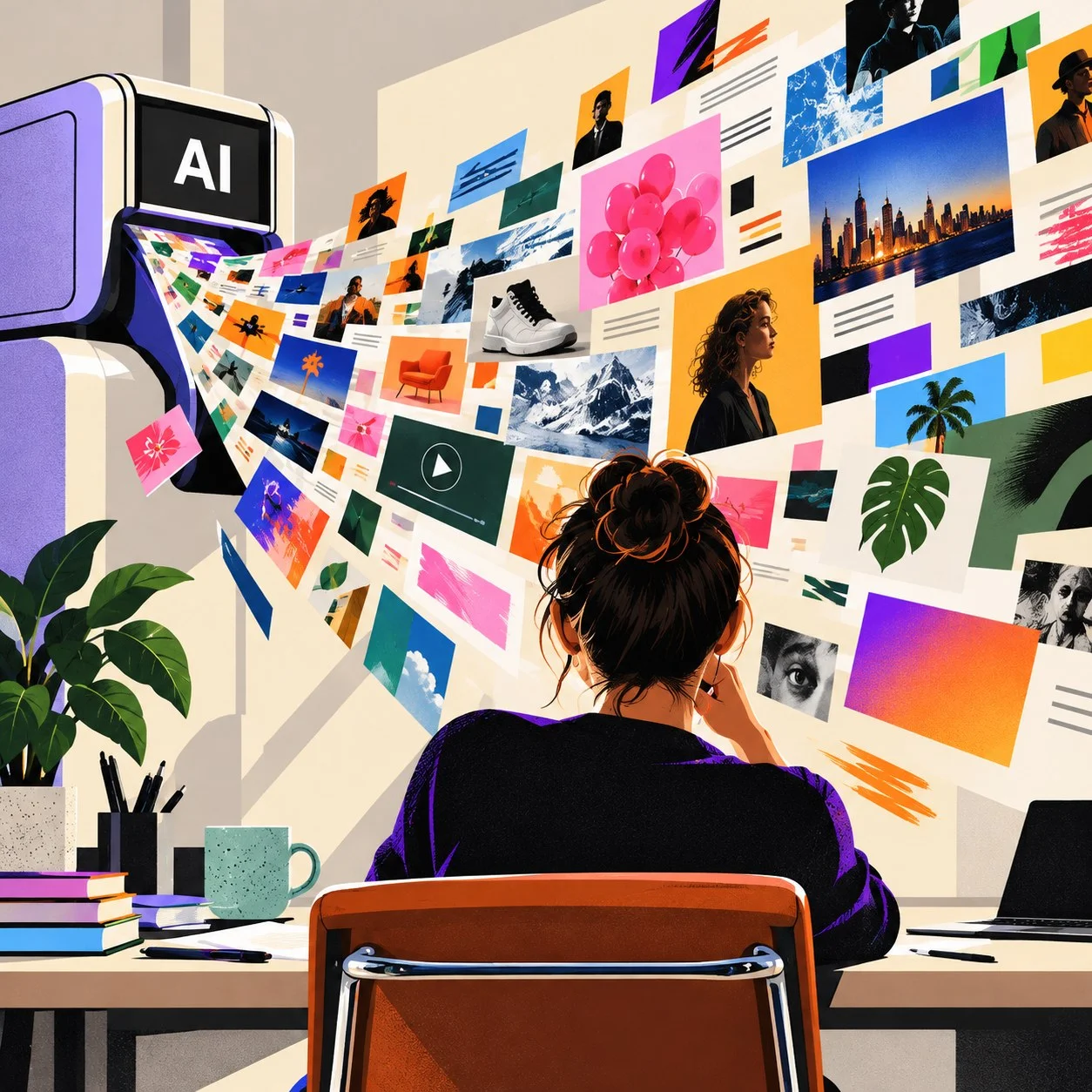
When everything gets faster, does it get better?
One of the most useful promises of AI is in its efficiency; the ability to produce more work in less time with fewer resources and processes. This is a very attractive feature on paper, especially in an industry that is constantly balancing creative ambition with budgets, deadlines and increasing demand. However, there is an interesting contradiction emerging: what happens when the ability to produce content faster simply creates an expectation to produce more and more of it?
Instead of giving creative teams time to brainstorm, experiment and develop better ideas, there’s a risk that efficiency becomes another reason to increase output. More assets, more variations, more campaigns, more content competing for the same limited attention. The work produced isn’t better or more considered... there’s just more of it. We risk confusing productivity with creativity.
Producing 100 pieces of content instead of ten might be a remarkable achievement in technicality, but what’s the point if none of those 100 pieces are actually worth any attention.

The most interesting thing about AI might be our reaction to it
There is something very revealing happing in advertising right now. As AI-generated video, imagery and copy become more commonplace, audiences are becoming equally familiar with what this content looks and feels like.
The visuals are overly polished, movements are ever so slightly unnatural, and the compositions are strangely familiar. The patterns are impossible to ignore once you’ve noticed them. This isn’t to say audiences automatically reject anything made with AI, but it does raise an interesting question about how much we value something when we know it could be generated in seconds.
At Advertising Week in New York this October, the creative agency Mekanism introduced a particularly entertaining take on the conversation.
The campaign ,“Give AI a Break,” introduced ChatGPTO, also known as the refusal bot; a chatbot that has gone out of office. Ask it to write a headline, develop a strategy or create a poster and it politely declines, instead asking you to step away from the screen and talk to real people.
This was part of a wider campaign, “Join us Human to Human,” encouraging people to put down their devices and reconnect with one another. The idea wasn’t to be anti-AI, but a playful, self-aware and refreshingly human take on the state of the industry. It doesn’t position technology as the enemy but instead humanises it and asks why we’ve become so preoccupied with what it can do that we’ve forgotten what we can do ourselves.
There’s irony in an advertising campaign about AI choosing to celebrate human connection, but perhaps that's why it works. In an industry obsessed with conversations about AI, it’s very telling that one of the most interesting creative moments of the week was simply about humans spending time together.
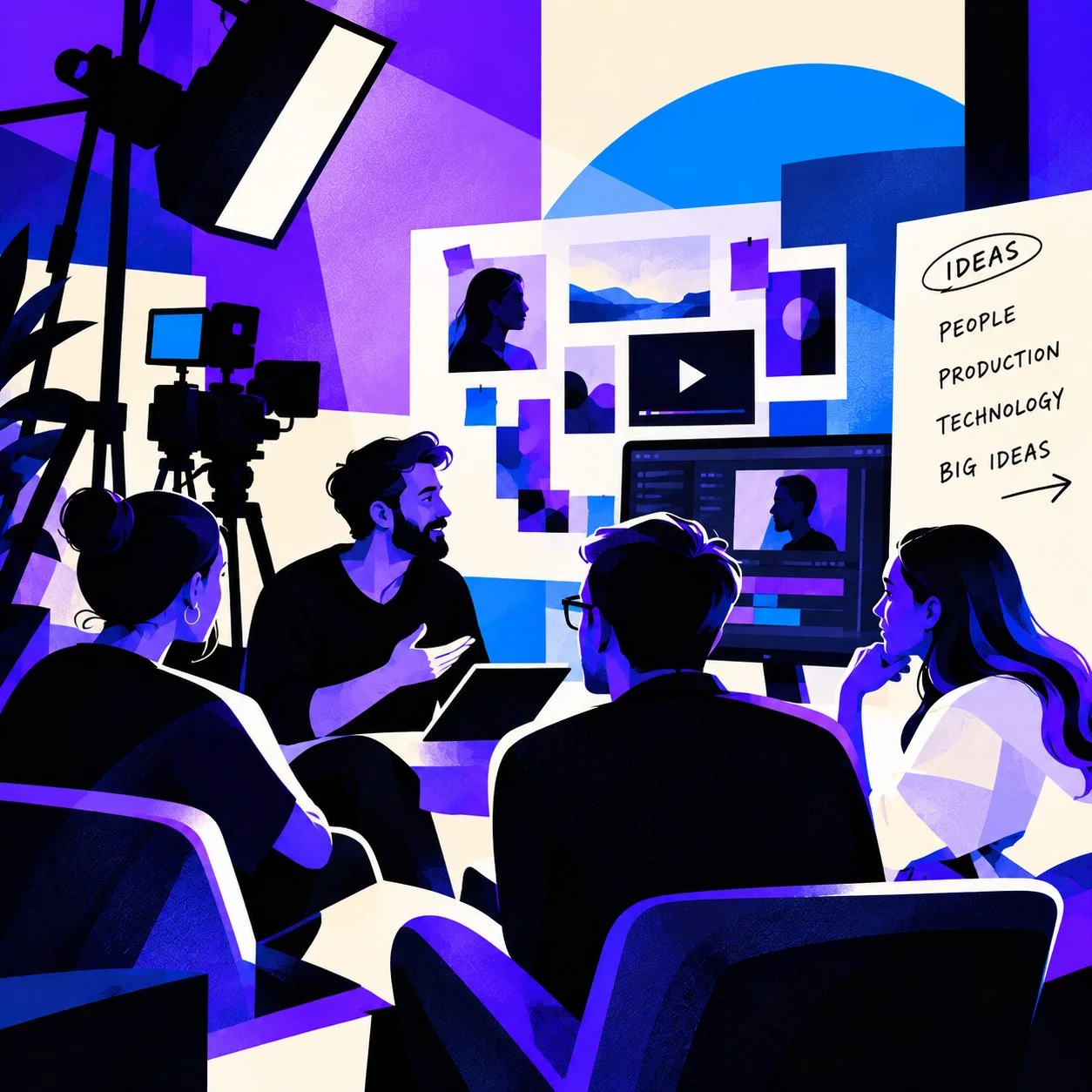
The future of high-volume creative still needs people
This was a recurring theme at our recent THG Studios event, The Future of High-Volume Creative, where we brought together people from across the industry to discuss how production is evolving. We talked about changing workflows, increasing content demands and what this all means from people responsible for creating.
What stayed with us the most was how optimistic the room felt about the future of the industry.
Not because everyone believed that AI would solve every challenge, but because there was a real sense of opportunity. Production is changing and so are the tools we use, the way that audiences discover and consume creative is certainly changing, yet there are also more ways to make, experiment and tell stories than we’ve ever had before.
If technology can take care of some of the more repetitive parts of production, there is so much more space for people to do what people do best: develop ideas, solve problems, collaborate and create work that actually resonates with the audience.
Want to explore what’s next for creative production?
Want to explore what’s next for creative production?
From using AI to enhance the creative process to bringing ambitious campaigns to life, we’re always up for a conversation. Get in touch to discover what’s possible at THG Studios, whether you’re looking for a full-service creative partner or the flexibility of our Dry Hire studios.
Prefer to talk?
hello@thgstudios.com